From Search Intent to the Right Machine
As Lead UX, I developed the end-to-end experience for a scalable, SEO-optimized B2B platform that connects diverse search intents with the right product and sales pathways.
Project context
Zeppelin Baumaschinen GmbH is Europe’s leading sales and service organization in the construction equipment industry and has been Caterpillar’s sales and service partner in Germany since 1954.
- Company
- Zeppelin GmbH
- Role
- Lead UX
- Period
- 2023
- Scope
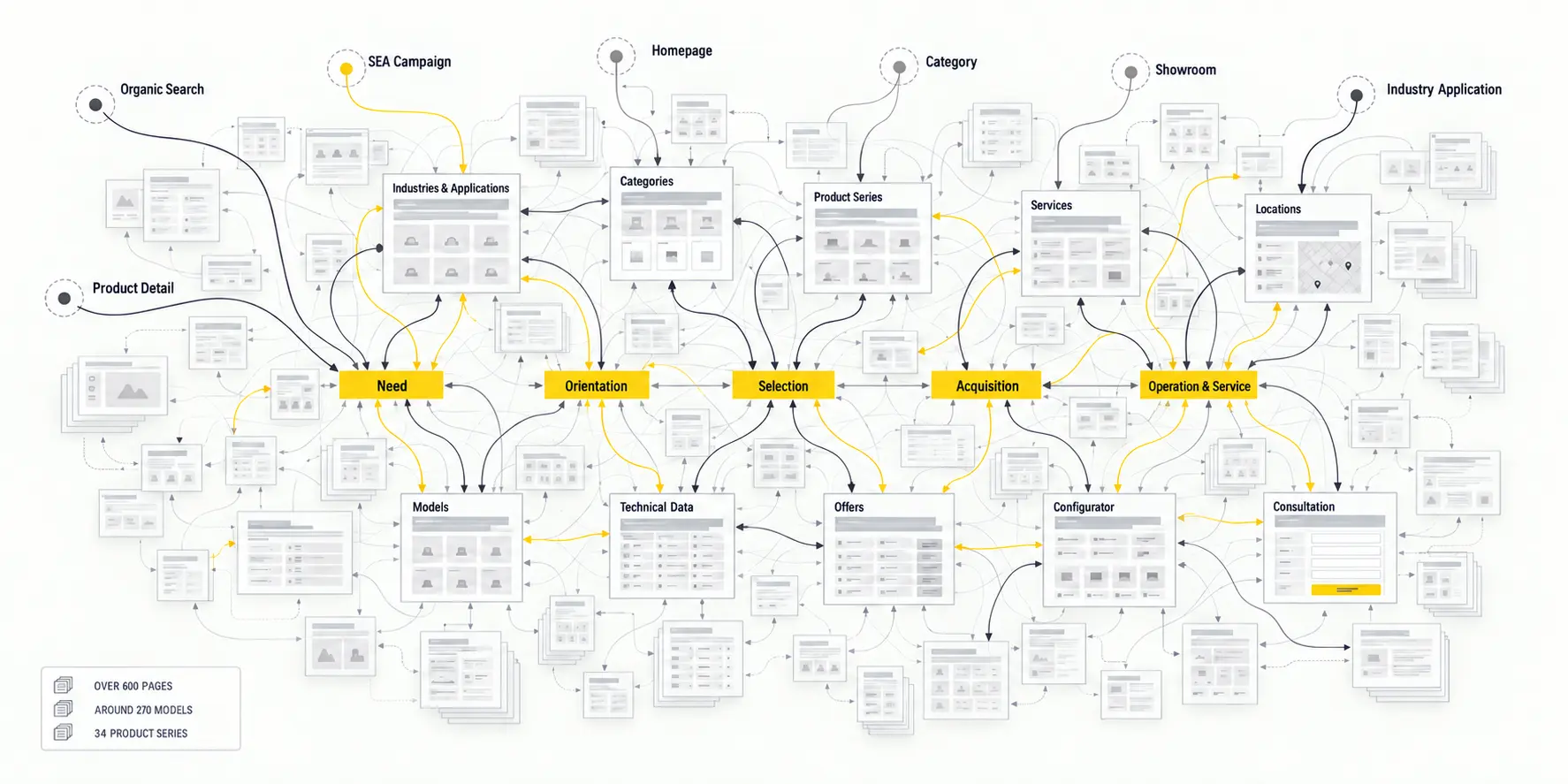
- Concept for an SEO-optimized B2B platform comprising more than 600 pages, around 270 machine models, and 34 machine series
- Tools
- Miro, Figma
Outcome
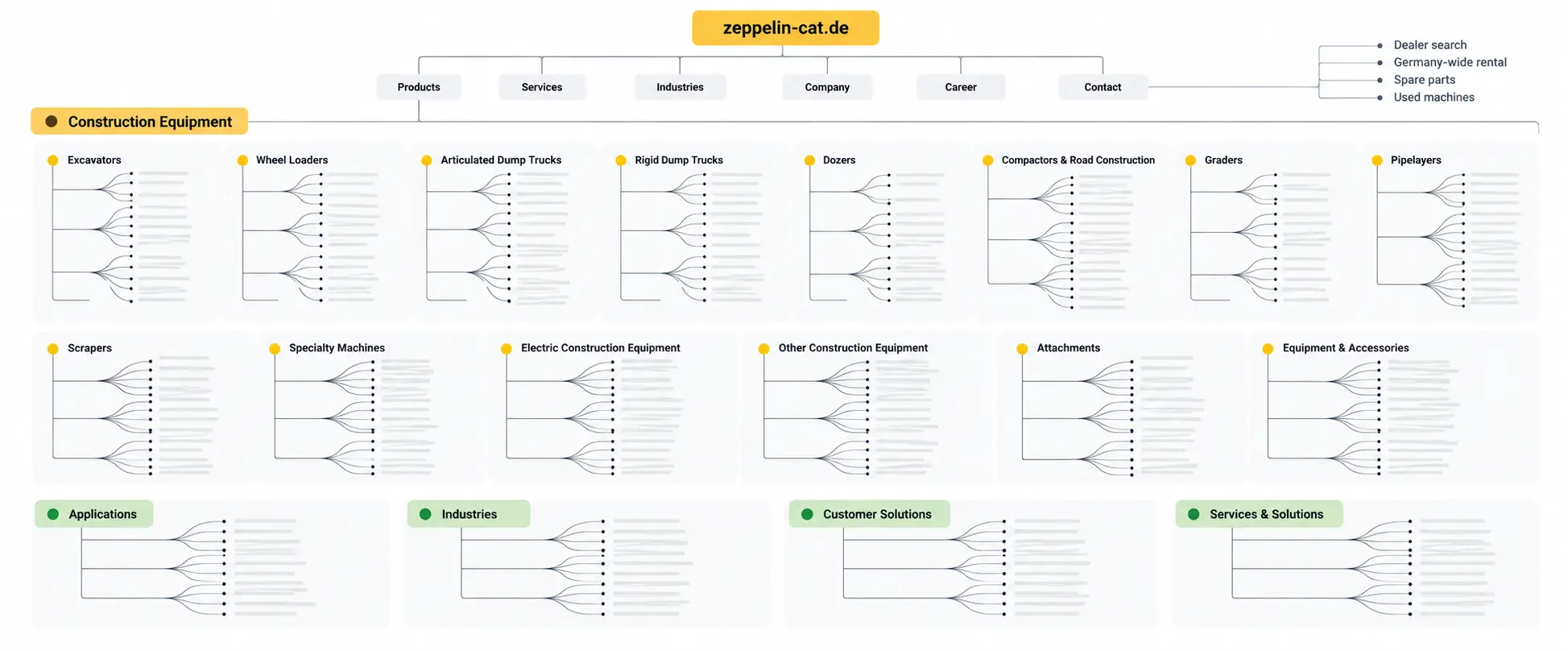
- A user-centered, SEO-optimized information architecture connects machine models and series with equipment, industries, technologies, services, and locations.
- Hub structures, consolidated content, and targeted entry pages address search intents and SEO opportunities, guiding users from organic search and SEA to relevant product, industry, and location pages.
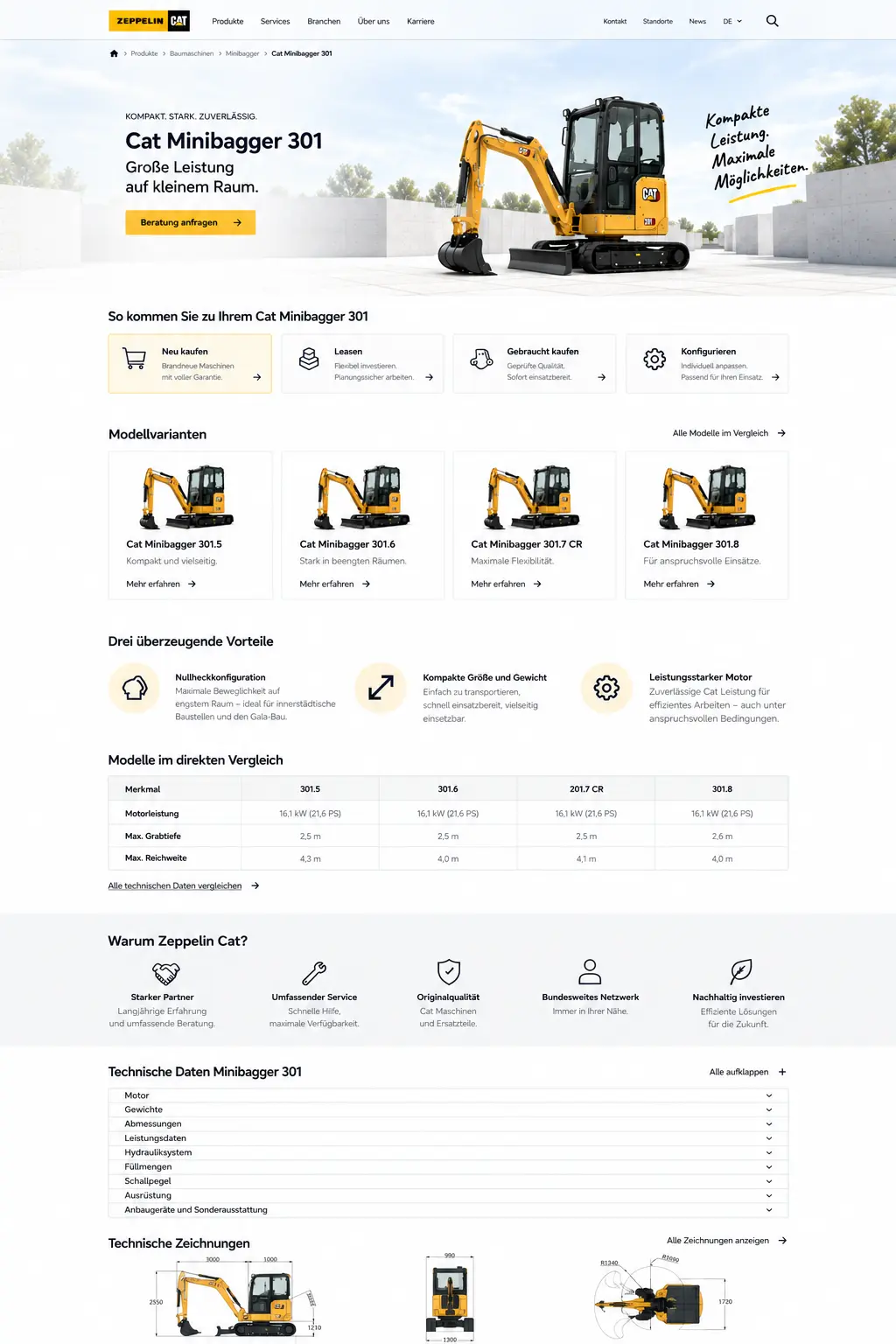
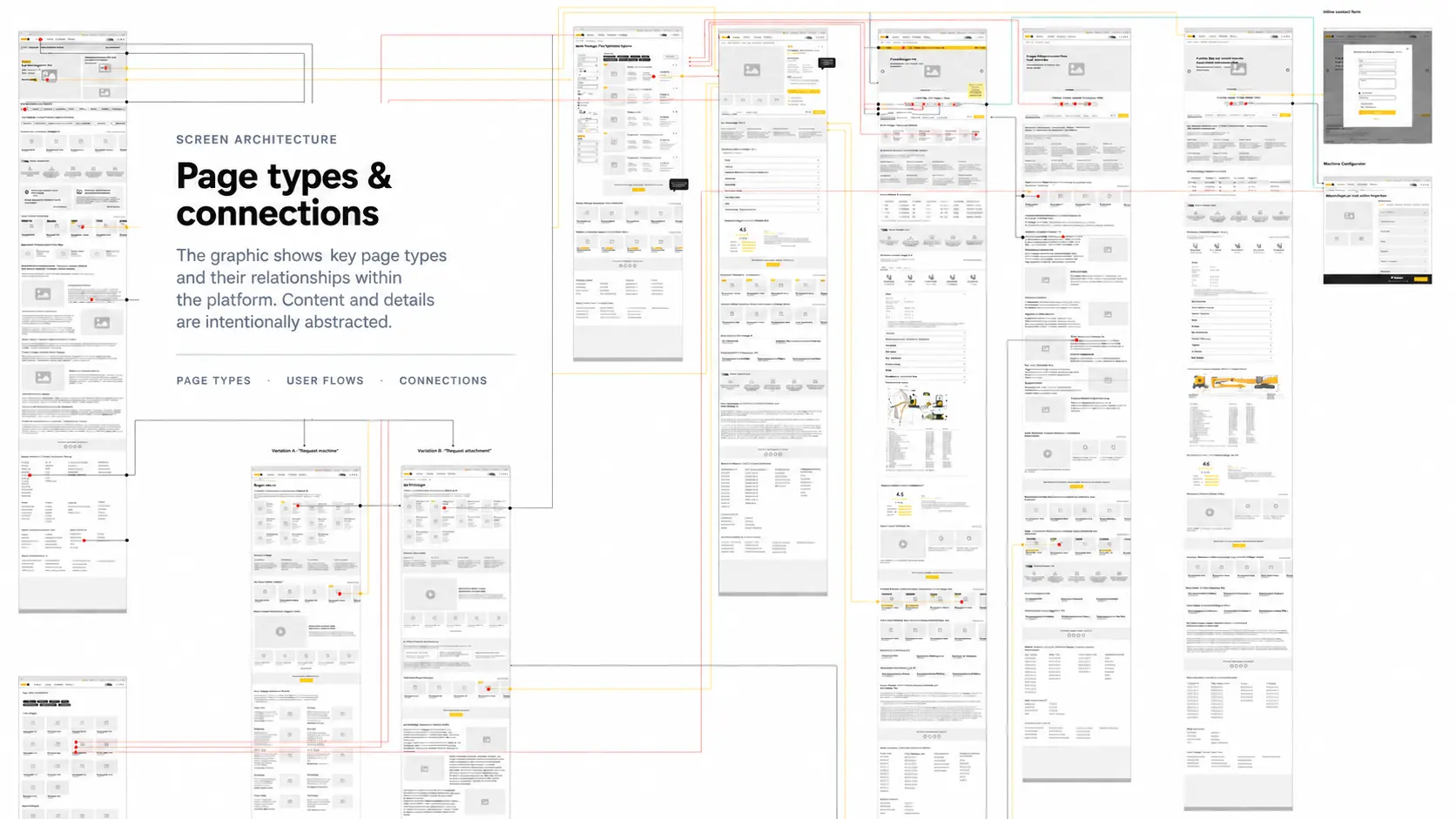
- Wireframes make the platform logic tangible as a connected page system, with a central model page bringing together product information, technical data, videos, accessories, and services and guiding users to relevant offers.
- Buying new, configuring, leasing, financing, and finding used equipment form distinct but connected decision paths.
My role
I shaped a coherent content and page framework around user needs, search intents, and SEO opportunities. Building on this, I translated the complex product and sales structure into a scalable information architecture, non-linear user journeys, and abstracted page concepts.
Skills
Starting point
The existing website largely separated editorial content from the shop, configurator, and other transactional features. As a result, there was no continuous user journey from initial research and product comparison to contact or transaction. Product and service information was sometimes incomplete or scattered across several areas, while the site structure did not systematically reflect relevant search intents or SEO opportunities.
The challenge
The challenge was to help users with very different goals and levels of knowledge navigate an extensive machine portfolio. The platform had to support non-linear journeys without exposing users to the full complexity of the offering.
- Queries such as “Mini excavator 301,” “buy a mini excavator,” and “excavator for landscaping” each required a different entry point.
- The same machine model had to be discoverable through product, industry, application, equipment, location, and transaction contexts.
- Users needed to move between researching, comparing, configuring, buying, and leasing without losing context.
- At the same time, the underlying logic had to be clear to marketing and sales and support a scalable page structure.
Approach
The concept work deliberately began with user groups and search intents before moving into page types and wireframes. This sequence created a sound foundation for all subsequent structural and design decisions.
- The starting point was a structured view of user groups, search intents, and primary and secondary entry points.
- Building on this, UX and SEO perspectives were brought together in an information architecture comprising hub structures, consolidated topic areas, and targeted content additions.
- The architecture was then translated into a page system spanning the homepage, overviews for business areas, categories, and machine series, model pages, offer overviews, and offer detail pages, and detailed in wireframes.
- User flows made the transitions between informational and sales pathways visible and, together with the wireframes, provided the basis for alignment with SEO, marketing, and sales.
Team and collaboration
- Team
- Lead UX in a two-person concept team
- Way of working
- Iterative concept work in a UX/SEO tandem, with subject-matter alignment with marketing and sales
The designs shown are concept work rather than a live interface, and internal source artifacts are not included. I’m happy to discuss the underlying information architecture, working approach, and decision-making logic in person.