B2B Platform Redesign
For Zeppelin Power Systems, I led the UX transformation of a complex B2B website, shifting the focus from internal structures to a digital platform designed around real user needs.
Project context
Zeppelin Power Systems develops energy, drive, and system solutions for complex B2B markets such as industry, marine, rail, oil and gas, and power generation.
- Company
- Zeppelin GmbH
- Role
- Lead UX, Senior User Experience Designer
- Period
- 2025
- Scope
- Corporate website for Germany (DE/EN) and Austria, headless CMS, design system, responsive frontend
- Tools
- Figma, Strapi, shadcn/ui, Tailwind CSS, Storybook
Outcome
+25%
Organic search visibility*
+35%
Ranking keywords*
40+
In-depth expert interviews
- The website was rebuilt technically, visually, and structurally and includes 700 pages in German and English, plus an Austrian country version.
- Workshops and more than 40 expert interviews informed a new information architecture, content structure, and core platform features. These connect customer needs, product logic, and internal structures more clearly.
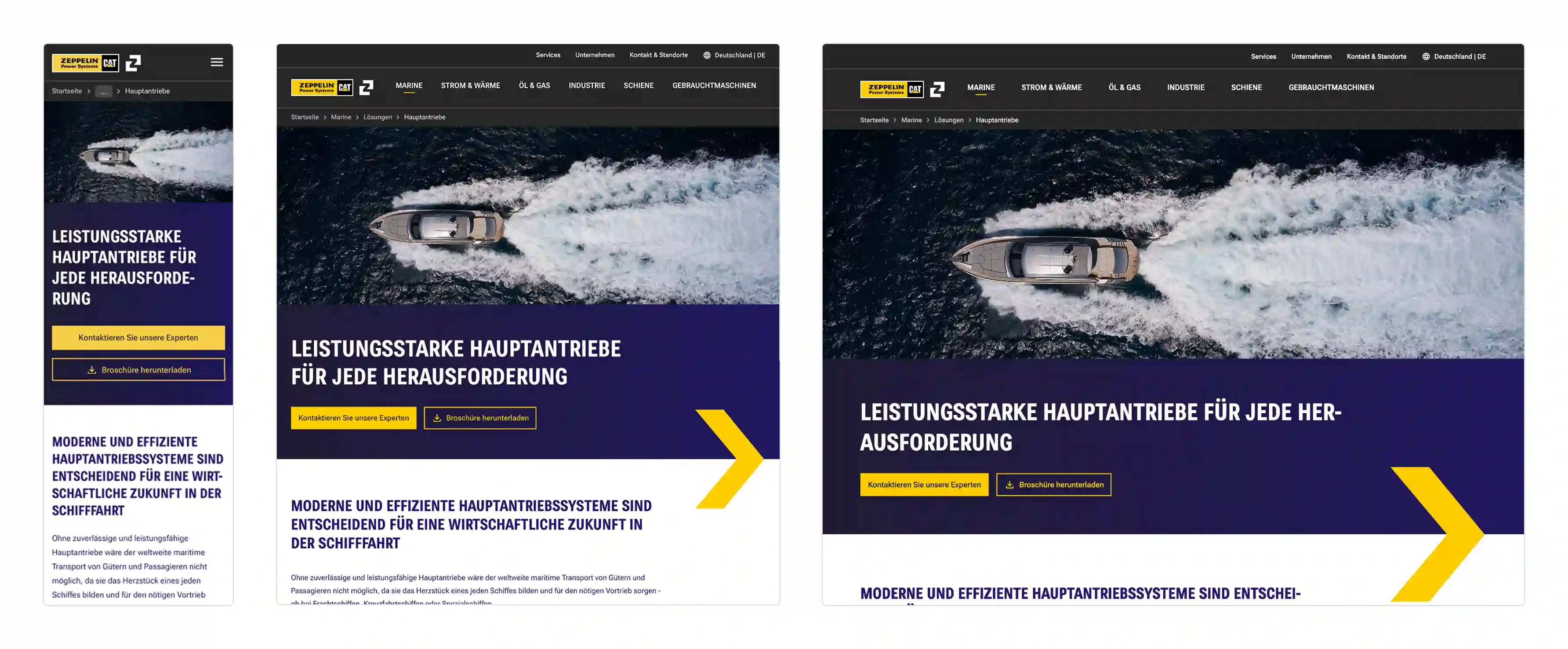
- The new interface makes key entry points more visible and helps users reach relevant products, services, and contact options faster.
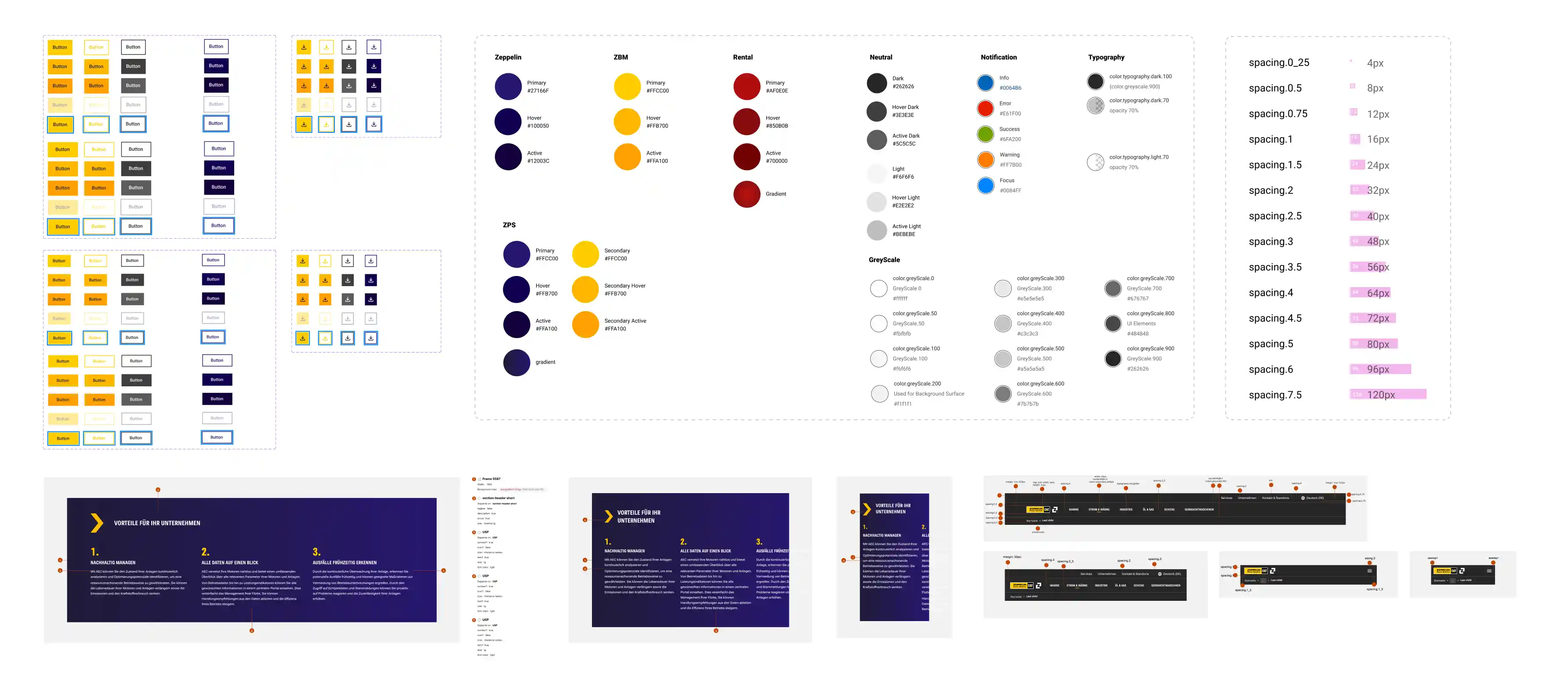
- A new design system with more than 50 CMS components provides a consistent and reusable foundation for further development.
- Connecting the CMS structure, responsive components, and content workflows makes the platform easier to maintain and extend.
- Cat products and Zeppelin’s own services were brought together on one platform without mixing their distinct brand contexts.
*Estimated increase since the relaunch on 1 April 2025. Desktop, all language and country variants combined.
My role
As Senior User Experience Designer and Lead UX, I was responsible for shaping the conceptual direction of the new website. I conducted expert interviews, structured requirements from specialist departments, marketing, sales, and service, and translated domain knowledge into information architecture, content structures, and UX concepts. I also contributed to and reviewed the design system with a focus on usability, accessibility, and responsive behavior.
Skills
Starting point
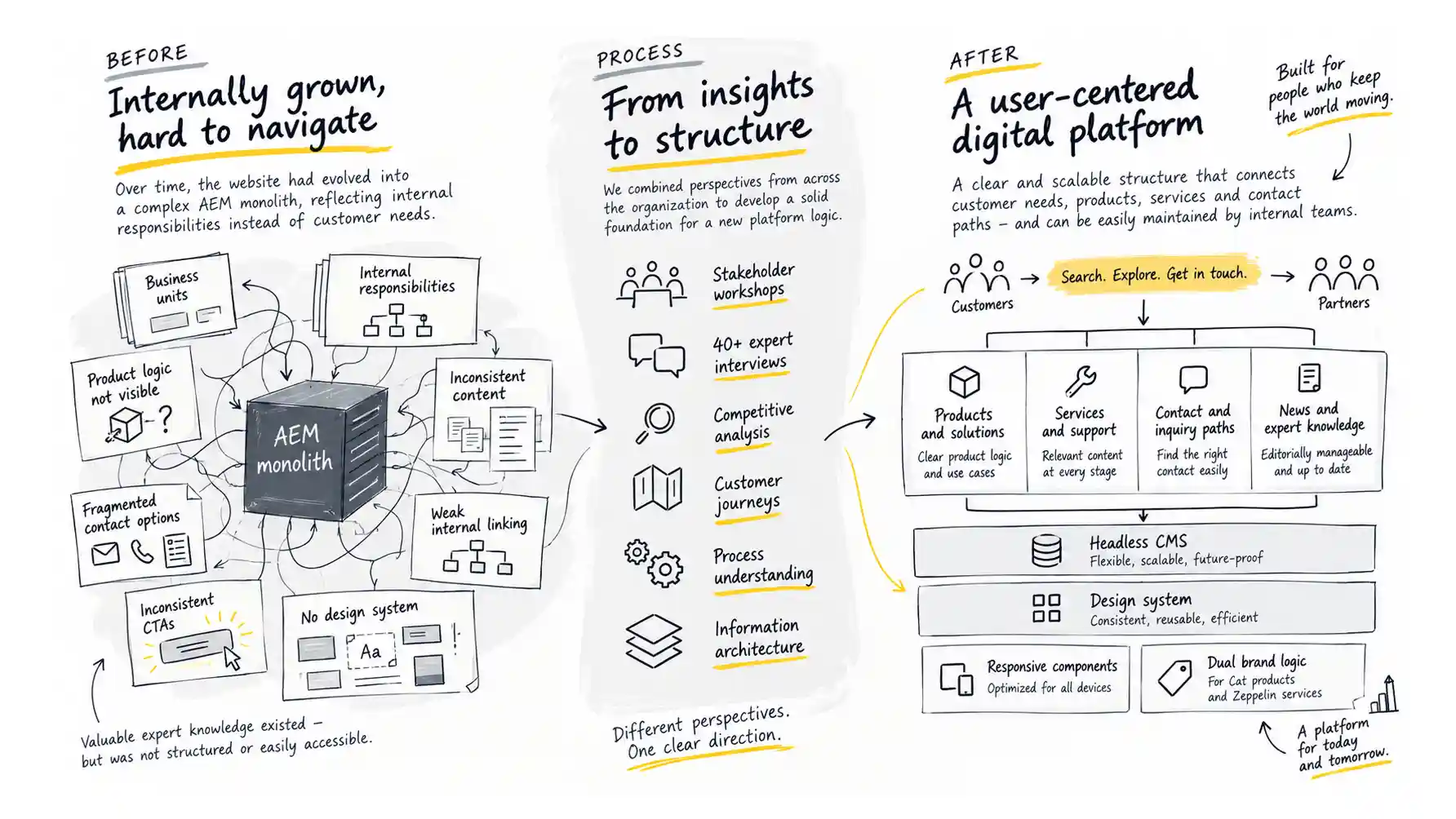
The existing website had grown over time into an increasingly unstable AEM monolith. It reflected internal responsibilities rather than the way customers search for products, solutions, and points of contact. Content, internal linking, contact options, and calls to action were used inconsistently. At the same time, there was no design system, which made new functionality visually inconsistent, costly, and time-consuming to implement.
The challenge
The challenge was not simply to relaunch a website, but to translate a complex B2B organization into a clear digital platform. Technical renewal, information architecture, content, design system work, and expectations from specialist departments, marketing, sales, and service all had to come together. The most demanding part was turning an internally grown organizational logic into a platform that is understandable for customers and maintainable for internal teams.
- Customer needs, product logic, and the internal company structure were not sufficiently connected on the existing website.
- Relevant expert knowledge existed across the organization, but it was not structured, linked, or written in a way that made it easy to find digitally.
- Because reliable tracking data was limited, interviews, competitive analysis, customer journeys, and established UX patterns became the basis for the realignment.
- Cat products and Zeppelin’s own services had to share one platform while still retaining their distinct brand identities. A dedicated branding logic built into both the CMS and the design system addressed this. It kept the experience clearly differentiated for users, while making the component structure and editorial setup more complex.
Approach
The analysis phase became the key lever of the project. Workshops, interviews, and process understanding created a shared target picture and revealed which content, features, and structures the new platform really needed to support.
- Workshops helped clarify the target picture, expectations, company principles, and key business processes with stakeholders.
- More than 40 in-depth interviews surfaced domain knowledge, customer questions, and operational process realities.
- Interviews, competitive analysis, and high-level customer journeys informed the information architecture, key page types, and core platform features.
- Design system, CMS structure, responsive components, and content workflows were connected so the website could be maintained and extended after launch.
Team and collaboration
- Team
- Lead UX in an eight-person core team, working with project leadership, Head of Digital Experience, design, development, content management, SEO, marketing, and specialist departments
- Guided
- Designers, developers, and content managers on UX, content, and design-related topics
- Way of working
- Workshop-based, iterative, and closely aligned with specialist departments, marketing, sales, customer service, SEO, project leadership, and development
Specific performance, conversion, and business figures are not disclosed for reasons of confidentiality. I’m happy to discuss the underlying platform logic, working approach, and decision-making process in person.